
May 16, 2026 — The ongoing art exhibition of the Philippine Artists Network for Community Integrative Transformation (PANCIT) at the Sunset Community Centre on Vancouver’s Main Street opened on April 30 as a homage to the dead and survivors of the Lapu-Lapu festival tragedy of last year.
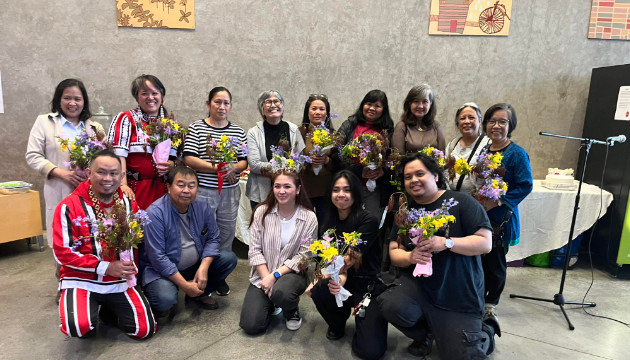
Attended by approximately 50 guests plus the 14 artists themselves and the community centre’s able staff, the show titled “Healing Colours, Colours of Renewal: Ang Babang Luksa ng Bayan [Editor’s note: translated to ‘community lifts veil of mourning’]” renews calls for accountability, justice, transparency, and truth for the many lives that forever changed with the April 2025 attack.
Even the event’s land acknowledgment invoked the spirits and the spirit warriors of the unceded ancestral homelands of the Squamish, Tseil Waututh, Musqueam Nations to welcome the artists with their guests as visitors or residents of their territory and to guide them in their advocacies.
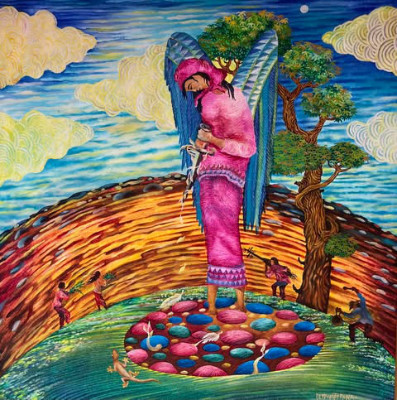 “The Healer of the Living Souls” by Bert Monterona represents the universal presence of compassion, resilience, and balance in times of emotional and spiritual unrest.
This invocation parallels the spirits’ continuing lamentations about the ownership of their lands and their perceived three-level-governments’ appropriation of their lands. Why did the tragedy happen? Who is accountable for the crime that took the lives of 11 people and damaged the lives of more people and their families?
Why are the United Way BC (UWBC) Kapwa Strong Fund donees being asked to return the money that was offered to them for trauma-informed healing? Is not UWBC accountable to the BC provincial government on the Kapwa Strong Fund’s raison d’être?
Bert Monterona, PANCIT’s founder and lead muralist, welcomed the guests with a similar invocation. Himself a member of the Talaandig in the southern Philippine province of Bukidnon, Monterona expressed frustration over the failure of other Kapwa Strong Fund recipients to account for the fund. Some put up a symposium, conference, or meeting that did not match the Fund’s raison d’être or relate to the concept of Kapwa.
The art exhibition displays the work of 14 artists, some of whose sense of motivation comes from Monterona himself: “We continue to do mural painting even without funding from UWBC or any official donor. Our painting forms part of our trauma healing. Our brushstrokes on canvases reveal our emotions and sentiments about the tragedy. We want the rawness of our emotions to be captured on our canvases. Our canvases in turn become our mouthpiece for transparency, justice, and accountability.”
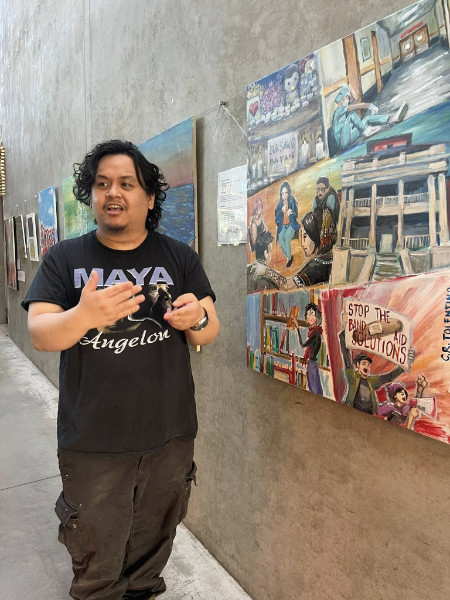 Calic Raya Tolentino with his “Steps toward Preventable Tragedies for a Healthier Society”
These artists, many of whom are PANCIT founding members, started work on their canvases in January 2026 – a timely three-month preparation for commemorating the dead on their first year anniversary in April 2026.
“Afterlives” is Leonora Angeles’ imagining of the many possible realities of post-tragedy existence and highlights the intersubjective realities of mourning, coping, healing together, and recreating collective lives based on the stories shared through people’s relentless hearts.
Montanya Añonuevo’s diptych, “Flower Field” and “Find Me in Your Memory,” honours loss and endures connection for collective strength.
“The Helix of Justice” weaves grief, truth, and accountability into a living spiral as Maria Veronica Caparas’ colours of burning yellow and red orange pulsate with the urgency of a memorial and a mandate.
“Courage” takes the viewers to Alda de Aza’s conquest of the farthest trails – an inspiring prompt for viewers to keep going in life despite tragic events.
Hygie Escasa’s “Family” shows her belief that, over time, one’s family – consisting of friends and community – helps one recover from grief and loss.
“Only the Body is Dead” acts out Oms Lavin’s supplication for remembering the dead lest they die twice; as long as someone remembers, the dead stay among the living.
Erie Maestro’s “Today Stops and Tomorrow does not Come: Where do They Go?” invites viewers to look up to the night skies where the stars of the dead shine bright and to know that the dead have gone into the hearts they call home.
“Love from Earth to Heaven” explores Mylene Maranoc’s invisible thread that connects the physical and the spiritual, and reflects on love that endures even death.
Bert Monterona’s “The Healer of the Living Souls” captures the Healer’s universal presence of compassion, resilience, and balance that weave the complexity of inner healing: tensions extant between pain and release, fragmentation and wholeness, struggle and hope, darkness and renewal.
“Bagani” represents the heroic warriors of the Manobo, Hagaonon, and Talaandig tribes of Bukidnon, Mindanao the most famous of whom is LapuLapu – believed to be a nomad adopted by the local tribe that he fought with, according to artist Soliman Poonon.
Lory Riego’s brushstrokes masterfully sketched “Phoenix” and “Embrace of a New Dawn” – both manifestations of courage and deeper purpose for growth, healing, and conviction.
“Steps toward Preventable Tragedies for a Healthier Society” lets out Calic Raya Tolentino’s call for leaders and officials to stop offering band-aid solutions to the mounting social issues and mental health concerns, and to allocate sufficient budget for essential social services delivery.
The celebratory nine-section dance with prayer, “Dugsu” calls for the healing power of collective engagement and transformative change as Andrea Vargas also invites viewers into the sacredness of “Dugsu” that resolves conflicts and re-establishes peace.
Ny Austria takes the viewers to another visual art form – photography. “Grief is Love that Perseveres” speaks to Grief’s collective nature, shared across a community in mourning.
When asked what made him allow Austria’s photo of six young adults in mourning to be included among the paintings, Monterona replies, “I want to promote visual creation in any form – one that tickles creative impulses and that promotes positive energy. It is like putting ingredients together for a sumptuous meal.”
“Since our first Healing Colours exhibition, I have been open to having photos and installation art for community inclusion. What is different with photography these days, however, is that it has no challenging process compared with that of photojournalism during my time,” he said, referring to PANCIT’s Healing Colours show that launched in October 2025.
Despite the ongoing war in the migrant communities in the aftermath of the LapuLapu Day 2025 tragedy, Monterona makes the continuing call for art as a space for individual creation that speaks no words or gesticulates no actions yet provokes and ignites emotions, whether positive or negative. PANCIT’s renewed commitment to truth, justice, and accountability tends to spark deep thinking in showing these positive or negative emotions.
About the Author
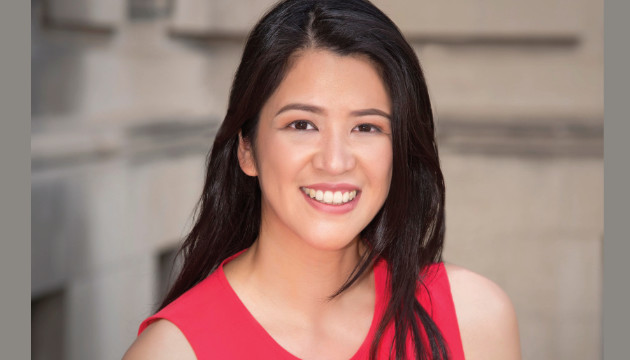
Maria Veronica “Vernie” G. Caparas, PhD is a Canadian Filipino learning facilitator, freelance journalist, and community-based researcher whose work bridges the fields of communication, migration, policy analysis, social sciences, and healing justice.