June 1, 2026 — As the dust from the tragic events of April 26, 2025 settles, Filipino community leaders look back on that fateful night to reflect on the hard lessons from the tragedy.
One of the worst mass casualty incidents to happen in Canada, the Lapu-lapu festival tragedy in Vancouver brought to light the lapses in safety and security measures, and the lack of preparedness by the organizers, the city government, and the police in responding to such a crisis. The gaps in assistance also highlighted the need for a program that will ensure continuous support for the families of the victims and survivors of the tragedy.
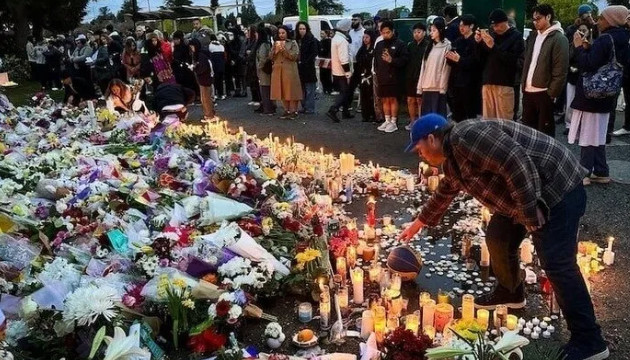 Mourners gather at a temporary memorial for festival victims last year.
How donations were spent
Following the deadly car-ramming attack, donations poured in through Filipino BC, the Canadian Red Cross, and United Way BC. Other organizations also held fund-raisers for the victims. United Way BC reported that it received more than $1.57 million in donations to the Kapwa Strong Fund, while an additional $451,570 in donations went directly to Filipino BC.
Late last year, however, victims started questioning where the donations went as they received very meager financial help from these organizations.
On their website, United Way BC clarified that direct assistance to victims is done through government programs, insurance and victim services, while their role is to support community recovery efforts. Thus, the donations it received were used to fund initiatives like counselling, healing circles and other projects that will help in supporting collective trauma recovery.
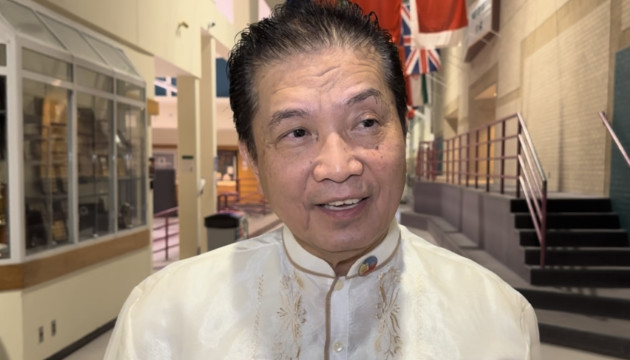
Arcie Lim, past interim president of the United Filipino Canadian Associations in BC (UFCABC), said it was unfortunate that United Way BC was not able to help the victims directly. Their group, however, understood that the victims would be needing financial help.
“At that time naisip namin, mas kailangan ng mga victims… yung financial aid, because we heard stories na hindi sila makapag-trabaho o kaya may mga iba sa kanila na galing pa sa ibang lugar or they have to stay close to the hospital.Yung mga ganoon. So kailangan talaga lang ng pera, pambili ng groceries, pambayad ng utilities (But for us, we realized that the victims need the financial aid more, because we heard stories that they are unable to work, or some of them lived farther away or they have to stay close to the hospital. Things like that. So they really needed the money, to buy groceries, to pay for utilities),” Lim said.
The UFCABC was among the organizations that received funding from United Way BC. But unlike other groups that were given grants from the Kapwa Strong Fund, UFCABC was able to use their funding to give direct financial help to the victims, in collaboration with the Vancouver Police Department’s Victim Services Unit. A committee formed by the UFCABC also did their own evaluation of victims that applied directly to them to determine how much financial assistance will be given.
Lim said they told the United Way BC that they will not be running any programs. “Sabi namin we will do it differently, kasi naman may leeway naman (We said we will do it differently because there’s also some leeway)”, Lim explained.
Following the backlash from the donation controversy, Lim said that United Way BC released an additional $187,500 dollars in funding to the UFCABC. The total money that they have received from the Kapwa Strong Fund has now gone up to $332,500. Lim said they were able to give financial aid to 115 victim-beneficiaries, with 48 other victim applications still pending.
Some organizations that received grants from the Kapwa Strong fund have indicated their plan to return their unused funds to the United Way. Among them is the Maple Bamboo Network Society, publisher of CanadianFilipino.Net. The group plans to return $3,500 to United Way BC.
Lim said two or three more organizations are also planning to return their unspent grants. He hopes that more associations will follow suit and that United Way BC will channel those funds back to the victims through UFCABC.
Still, Lim expressed concern and said these donations will not go on forever. “Donations will dry up and that's a reality. So what's going to happen to the victims? And I think this is where the different levels of government should come in. Sila lang ang makakatulong talaga ng husto (They’re the ones that have the capacity to help). Because donations from the public is not sustainable. Parang pansamantala lang yan (It’s just temporary).”
Author Nathalie delos Santos agrees with Lim, and said that although she believes that Filipino BC could have done more to help the victims, she noted that long-term support for the victims is ultimately the responsibility of the government.
Delos Santos is one of the editors of the community anthology “Gathering Our Breath”, a collection of essays, art work and photographs to preserve the memory of collective grief and mourning following the Lapu-lapu tragedy.
The author added that at this time, it is really challenging to navigate “the ongoing conversations of who is receiving care and how they receive care”.
Safety and security
The tragedy has completely changed the landscape for community events and festivals in Vancouver. Lim said that the City of Vancouver has started to implement more stringent requirements in the wake of the Lapu-lapu festival incident.
“I think moving forward, mas magiging strict pa sila sa enforcement ng mga rules and guidelines. So ang masama niyan, na-apektuhan din tayo. Hindi tayo basta na magkakaroon ng mga piyesta-piyesta because we won't be able to afford it (I think moving forward, they will implement stricter enforcement of the rules and guidelines. Unfortunately, we will also be affected. It will be difficult to hold our festivals because we won’t be able to afford it),” Lim said.
As an example, he cited the UFCABC’s yearly flag-raising event to kick-off the Filipino Heritage Month in June. “Before, most Filipino events rated lang ang risk as Level 1. Now, most of them are rated Level 2. So (if) they're rated Level 2, they will ask for more security, more police presence, road closures, higher insurance coverage,” Lim explained, adding that organizers will have to shoulder the expenses for the additional security.
After the horrific incident in Vancouver, the City of Burnaby immediately called for a review of its own safety guidelines in public gatherings.
Burnaby Councillor Maita Santiago said, “The Lapu-Lapu tragedy really prompted us to take a closer look at how we do safety and security and how we provide that as a city.”
They formed a Burnaby Event Safety and Security Team to look at the risks and planning measures for all the special events in the city last year to identify where improvements to security and safety could be made. Unlike other cities, Santiago said that security at public gatherings in Burnaby are the city’s responsibility. She explained that the security plan is arranged by the event organizer and submitted to the city and the RCMP for review.
Santiago noted that Burnaby also has a budget for safety and security for events held in the city. “RCMP staffing is provided by the city at no cost to the organizers. There’s no bill that’s going to come out right at the end,” she said.
The Filipino-Canadian councillor said they took the usual precautions at public events held in Burnaby right after the Lapu-lapu festival tragedy, like the TJ Fest that was scheduled a week after.
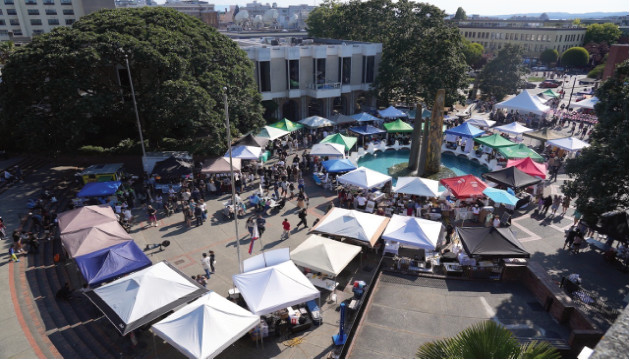
And despite the community’s grief after the tragedy, thousands of Filipinos still showed up when the Pinoy Festival was held at the Swangard Stadium in Burnaby on June 14, 2025, less than two months after the deadly vehicle attack.
Santiago said that people experience grief in different ways. But she has also seen how the planning and organizing for the Pinoy Festival has brought people closer, while they were also able to share and celebrate Filipino culture.
“I know what I went through when I experienced grief, when my parents passed away. And I know it never leaves you,” Santiago said. “It can be a year, two years, three years. You know, there are moments when it's still quite raw.”
But she said being around people can also help. “When there are events like the Pinoy Festival, for example, where for that weekend, for that day… you experience joy and you see other people, you see friends… I think as a community, even with other overseas immigrant communities, you're always looking for home. So through cultural events like this or Pinoy Festival, that's what they strive, the organizers strive to create. And that's what the community strives to create by coming together,” the councillor said.
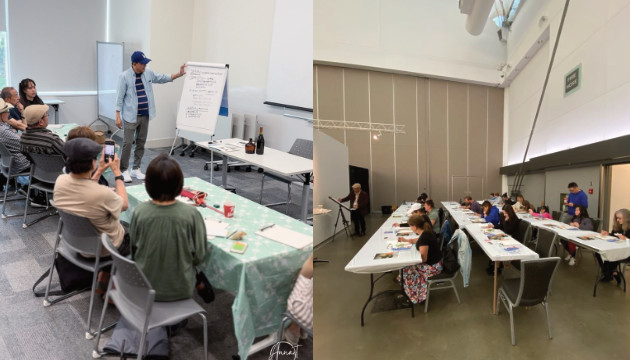
A space for community healing
When their book “Gathering Our Breath” was launched last May, Delos Santos noticed that many members of the community still felt the need to continue the conversation about the tragedy. She believes that “a lot of support still needs to happen, whether that looks like traditional therapy or gathering in spaces and having the ability to talk”.
Delos Santos added, “We're tired of being called resilient, when really, we're just doing the best we can with what's happened versus the real lasting change that needs to continue. It's like an ongoing conversation. It doesn't end when media attention ends, and people have forgotten about what happened last year.”
Speaking with CanadianFilipino.Net four months after the tragedy, Filipino BC Chair RJ Aquino hammered on the urgency to address the need of the community for their own space. He stressed, “This has brought to the forefront the need for more mental health support. This has brought to the forefront the need to have more meaningful culturally grounded programming and this has brought to the forefront the need for a physical space in order to have all of this.”
He vowed to continue to work “towards the ultimate goal of having a physical location in order to have these programs and in order to have a gathering space for us to celebrate, share, and, you know, continue to work together in just doing what we like to do as a community and celebrating and sharing our culture.”
Unanswered questions
A proposed class action lawsuit has been filed this year before the BC Supreme Court against the City of Vancouver, the Vancouver Coastal Health Authority and car-ramming suspect Kai-ji Adam Lo, alleging negligence in assessing the danger that Lo posed which resulted in the loss of lives at the Lapu-lapu Festival.
Lim said it is up to the courts to determine who should be held liable for the tragedy, even as he stressed that the Filipino community should continue to fight for measures that will ensure that a violent attack like this will not happen again.
For her part, Burnaby councillor Santiago, reflecting on the lessons from the tragedy, acknowledged that so many questions remain unanswered, and said that an independent public inquiry can be a step in the right direction. She is hopeful that this public inquiry can lead to a better understanding of “what happened, how it happened and the type of support that was given afterwards to victims in the community”.
But Santiago said, “I don’t know if there can ever be, you know, closure… on something like this… Again, it would depend on how people look at it, but I feel like it could be, you know, a step at least towards that, and maybe at least, a step towards justice.”

About the Author
Rowena Papasin is a broadcast journalist who has covered major beats and worked as executive producer of “TV Patrol”, ABS-CBN’s most watched news program in the Philippines, before moving to Canada. She was also a contributing reporter and Canada News Coordinator for The Filipino Channel (TFC). Last year, together with a group of former ABS-CBN colleagues who now live in Canada, they launched the digital news platform “Patrol Abroad” on YouTube where she continues to report on stories about the Filipino community, particularly in British Columbia. Based in Metro Vancouver, Papasin likes running, watching K-dramas and crafting.