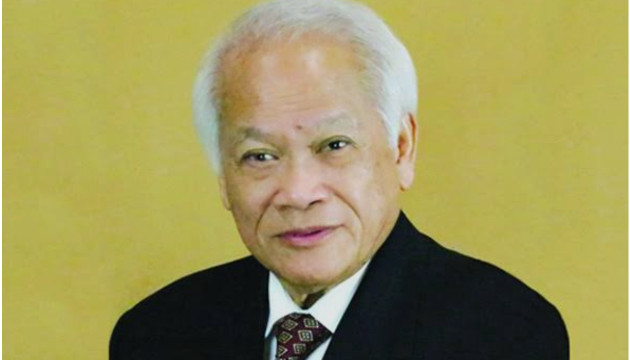
July 16, 2026 — This 24th article concludes the CFNet’s yearlong Kapwa Storytelling Project launched on August 1, 2025 in the wake of the deadliest mass-casualty event in Vancouver’s history. The previous 23 stories have mapped the Canadian Filipino community's journey from the night of the vehicle-ramming attack to the present. This final story provides an overview in three sections:
Section 1: An Overview - Storytelling Project and Backgrounder
What We Lost the Night of the Tragedy
When news of the tragedy broke, I watched from Winnipeg, paralyzed with shock and grief. I contacted the CFNet Team in Vancouver the next morning; we shared: “a shocking tragedy; nothing can ease our pain and sorrow; for now, we cry.”
To appreciate the value of this Project, we must first acknowledge the magnitude of the loss. The tragedy claimed 11 beloved human lives ages five to 65, and left a deep wound in the community. Happiness and the sense of safety vanished in a moment. Public gatherings and laughter were replaced by fear and isolation. Even our deeper sense of joy was shaken. The vehicle-ramming attack occurred at the height of the Filipino cultural celebration. The sudden shift from joy to horror intensified the rupture in human connection, which is central to psychological trauma. The brain’s ability to process happiness likely shut down. Joy remains, but it is now fragile.
How is the loss recognized?
The human nervous system is designed to protect us. The brain’s natural defence mechanisms respond immediately after a tragedy. The tragedy triggers stress hormones that affect memory, emotional regulation, and decision-making. While these hormone levels are not easily measured, their effects are well known. They appear as symptoms reported to health providers and as signs observed by families, friends, and caregivers.
Individuals may function on autopilot, completing daily tasks without emotional engagement. They experience numbness, sudden anger, fear, sleep disturbances, and shifts in behaviour. The community may stop gathering for cultural festivals, weddings, or milestones, or participate in a sombre, performative way. Members may withdraw from organizations or avoid discussing the festival, leading to fragmentation.
What the Kapwa Storytelling Project has said:
The Project confirms that grief after a mass casualty event is complex, prolonged, and unpredictable. Social friction within the community is inevitable. Protecting public spaces requires urgent government action at all levels.
Survivors and family members who shared their experiences, along with CFNet’s decision to document these narratives, have created a valuable archive. The 23 stories address most of the goals outlined in the Project’s launch editorial, providing a practical guide for managing large scale trauma. This foundation sets the stage for exploring how, in the face of such profound loss, the community can begin to cultivate joy once again.
Section 2: From Passive Survival to Active Resilience
This section traces our community’s journey from passive survival to active resistance by examining and exploring why fleeting "happiness" is not enough to heal community fractures and, instead, cultivate communal joy rooted in kapwa and pakikipagkapwa and why we must reject passive coping and make the case for active resilience over mere survival to build a future permanently anchored in a confident, collective joy.
It is essential that we make a distinction between happiness and joy, for confusing the two halts the entire process of healing from a deep communal tragedy. While often used interchangeably, they are fundamentally different emotional states. Happiness cannot coexist with suffering and grief, but joy can. Joy is a steady sense of connection that allows us to feel grief while also feeling supported. We can mourn loss and still find comfort in community. Joy arises from core beliefs and shared humanity, making it enduring. It is founded on meaning, connection, purpose, and identity—values like bayanihan, kapwa, and pakikipagkapwa. This deep peace can persist even during our darkest nights when things go wrong.
Happiness, by contrast, is fleeting and dependent on circumstance. Expecting happiness in the midst of trauma is unrealistic, and pressuring others to “cultivate happiness” can be isolating. Forcing happiness during grief does not work.
Focusing on cultivating joy changes the message. It tells the community: Your circumstances are painful, and your happiness has been disrupted—but through connection, storytelling, and mutual care, you can still access an unbreakable reservoir of inner life and communal solidarity. Joy is a discipline you practice; happiness is a byproduct you encounter.
As cultural essayist Maria Popova notes, choosing joy amidst despair is a “counter-cultural act of courage and resistance,” giving survival profound meaning. Understanding joy in this context allows us to understand the proposition that while the LapuLapu Day Street Festival tragedy shattered the community's immediate happiness, cultivating joy — to find meaning and solidarity amidst grief — provides the foundation for genuine renewal.
Through this project, CFNet set out to identify the scope of loss, highlight core themes, and learn how the Canadian Filipino community stays strong. Though the tragedy took away Vancouver’s happiness, cultivating communal joy amid grief—guided by kapwa and pakikipagkapwa—offers a way forward. The 23 stories map our journey, showing both progress and lingering pain. The main goal—to end the isolation of trauma—has been largely achieved. By creating a safe space for shared grief, the project brought kapwa to life, inspiring gatherings like babang-luksa (end of mourning), Masses of Remembrance, fundraising banquets, and the Day of Togetherness. These events have helped survivors, grieving families, and first responders feel recognized and supported.
For many, emotional healing is incomplete. The trauma has revealed divisions in the Vancouver community, as shown in national media reports about fund transparency, calls for audits, pleas for support, and protests at anniversary events. These issues reveal that community solidarity is still evolving. While initiatives like PANCIT’s Healing Colours call for truth and accountability, ongoing friction reminds us that healing is complex and takes time.
The project has laid a strong foundation and amplified the call for a dedicated Filipino Cultural Centre in Vancouver—a place for culture and mutual support. Still, weaving these threads of grief into a harmonious network remains a challenge. It is in this gap, between achieved goals and complete healing, that we must seek intentional pathways to renewal.
The project provides a blueprint and a collective voice, but translating these stories into lasting institutional change is the next challenge. We must map our pathways to renewal in the space between personal healing and the systemic security still needed.
An honest assessment means confronting social tensions, including protests during the Togetherness Remembrance Day. Rather than criticizing community leaders, these public expressions should be seen as acts of pakikipagkapwa—a call to uphold shared values. Such frictions remind us that leading a grieving community requires humility, honesty, and collaboration. Divergent opinions signal a healthy, engaged community.
To handle these tensions, we can borrow economist Ray Dalio’s insight: [Pain + Reflection = Progress]. The tragedy brought deep pain, and the ensuing protests and tensions are part of our growth. Embracing Dalio’s equation, our community can turn shared pain and disagreement into progress. These challenges push leaders to prioritize accountability, transparency, and justice in our renewal.
To move from tension to renewal, we can use the approach shared by Professor Leonora Angeles in the series’ twenty-third story, “No to Dead-End Resilience. Long Live Resistance!” Dr. Angeles warns against “inert resilience”—a passive state in which communities absorb trauma and make only minor adjustments. Survival alone is not enough; we must activate “active resilience,” turning grief into collective action and resisting forces that keep us at risk.
This idea echoes Donald DeMarco’s analogy: you cannot create a garden simply by removing weeds. After clearing the weeds, you must plant and nurture new growth, or the weeds return. Similarly, building a strong community requires more than avoiding conflict. True, lasting joy needs active transformation. Through this lens of transformative resilience, we can reclaim our public spaces and shared rituals as pathways to renewal.
Section 3: Three Concrete Pathways to Renewal
This section outlines the three actionable pathways the community can take to cultivate this confident, collective joy.
Path 1: Reclaiming Public Spaces through Empathy and Dialogue The first step toward transformation is reclaiming our physical environments—fulfilling a core aim of the Kapwa Storytelling Project: creating a dedicated space for empathy and dialogue. As Dr. Angeles and DeMarco suggest, inert resilience would simply erect a silent monument—a passive marker of trauma. Active resilience, however, transforms the Lapu-Lapu Day Festival site into a living sanctuary for connection. We must establish a “breathing space” for ongoing, face-to-face dialogue.
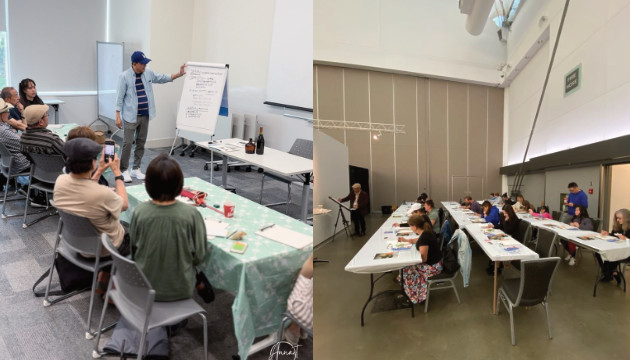
In this space, the community can gather to build deep empathy. Cultivating empathy is inseparable from cultivating joy; by opening our hearts to each other’s pain we help create collective joy. Kahlil Gibran observed that joy and pain are inseparable: the sorrow that carves into us is the well that holds our joy. Hosting storytelling circles and open forums allow neighbours to voice viewpoints, air grievances, and share grief without fear of judgment. This space becomes an anchor for processing the past year’s complex emotions in a safe, respectful environment, transforming a place of loss into the soil of renewal.
Path 2: Strong Solidarity through Pakikipagkapwa
Moving from joy’s internal anchor to external renewal, kapwa must be expressed through pakikipagkapwa. It’s not enough to feel interconnected; the tragedy calls us to actively practice our shared humanity. Through pakikipagkapwa, Vancouver can build a strong solidarity and mutual aid.
This kind of action matches George Bernard Shaw’s idea of joy: the experience of “being used for a purpose recognized by yourself as a mighty one,” being a “force of nature” in service to the community. Shaw reminds us that our lives belong to the whole, and it is our privilege to serve.
By building grassroots support networks, organizing peer-led mental health circles, and coordinating direct aid without turning recipients into charity cases, we live out this call. Here, we discover a resilient joy born from knowing our bond is stronger than the trauma that tried to break us.
Path 3: Expressive Art and Cultural Resurgence
Just as physical spaces must be reclaimed, our collective consciousness must be revitalized through expressive art and cultural resurgence. This is the ultimate vehicle for active resilience.
As Dr. Angeles noted, a community trapped in inert resilience uses art to mask pain; active resilience demands art that tells the truth. We see this in initiatives like PANCIT’s Healing Colours of Renewal exhibit, which calls for transparency and accountability. Demands for transparency should not be seen as attacks on the community’s integrity, but as signs of faith in it. Embracing friction is a healthy exercise in democracy. Viewing public dissent as shameful is a relic of colonialism that used silence to preserve the status quo. By breaking that silence through art, the community proves its unity is strong enough to hold diverse viewpoints.
This reclamation finds a historical echo in Beethoven’s Ode to Joy—composed in isolation, yet a triumphant call for unity. By supporting local art, music, and literature, the community brings this spirit to life, turning pain into a shared expression of human connection. When a community paints over trauma with its cultural heritage, it claims a confident joy. This is creative reclamation: that even after tragedy, we have the power to shape our own renewal.
Conclusion
The Kapwa Storytelling Project shows that while the Lapu-Lapu Day Festival tragedy shattered Vancouver’s happiness, it could not extinguish its joy. By defining joy not as the absence of sorrow, but as an unbreakable internal anchor, this final story offers a blueprint for renewal.
Through pakikipagkapwa, social frictions serve as a moral guide, guiding us toward our best selves. Ray Dalio’s formula—pain plus reflection equals progress—ensures our institutional future matches our cultural strength.
Guided by Dr. Angeles’ call to avoid the dead end of passive coping, and inspired by DeMarco’s charge to actively plant seeds of virtue, the way forward is through transformative resilience. By building spaces for empathy, we honour Gibran’s truth that sorrow deepens the well meant for future grace. By championing arts that demand accountability, we dismantle colonial silences and pass on Shaw’s “splendid torch.” Like Beethoven’s symphony rising from suffering, our stories culminate in a call for global humanity and cultural kinship.
The 24 stories are not just a record of loss, but a testament to how we rose. As this Project concludes, the Canadian-Filipino community stands transformed—bound by kapwa and pakikipagkapwa, strengthened by truth, and moving forward into a future anchored in collective joy.
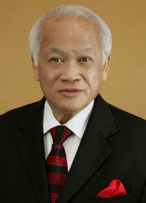
Editor's note: Dr. Rey D. Pagtakhan, P.C., O.M., LL.D., Sc.D., M.D. M.Sc. is a retired lung specialist, professor of child health, and former MP, Parliamentary Secretary to the Prime Minister, and cabinet minister. He graduated from the University of the Philippines, did postgraduate training and studies at the Children’s Hospitals of Washington University in St. Louis and the University of Manitoba in Winnipeg, and spent a sabbatical year as Visiting Professor at the University of Arizona Medical Center. He is the author of articles and chapters in medical journals and textbooks and columnist for community newsmagazines. Widely lectured in Canada and abroad, he spoke in June 2003 on “The Global Threat of New Infectious Diseases” at the G-8 Science Ministers/Advisors Carnegie Group Meeting in Berlin. He volunteers on the Advisory Council of Immigration Partnership Winnipeg and the Board of St. Paul’s College Foundation at the University of Manitoba.