

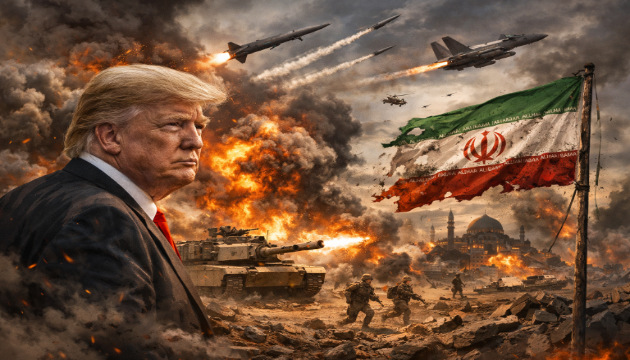
April 1, 2026 – It’s appalling that American voters enabled one man with a bloated ego and unhinged mind to cause daily economic hardships on 8 billion people in countries around the globe even if those people are not directly responsible for the closing of the Strait of Hormuz.
The Philippines, dependent on Gulf oil and the earnings of 3 million Filipino migrant workers in the Middle East, is one of those countries struggling to survive the current oil crisis. Its peso has crashed past Peso 60.50 per US dollar, a record low.
The countries around the Persian Gulf do not merely export 20% of the world’s oil and gas supply through the Strait of Hormuz largely headed for Asia and Europe oil. They also export petrochemicals derived from processing crude oil. Modern technology and intensive farming depends on these by-products. With the blockade, many countries will run out of fertilizers and chemicals needed to produce fabrics, food, and microchips causing economic burden for Filipino families who import a substantial amount of the food they eat.
Philippines in state of national emergency
On Tuesday, March 24, President Bongbong Marcos declared a state of national emergency amid the soaring oil prices due to the closing of the Strait of Hormuz by Iran in its war with “The Big Satan United States and The Small Satan Israel.”
In Executive Order 110, Marcos said the Department of Energy (DOE) has determined that the ongoing fuel crisis poses a danger to the country’s power supplies. “A state of national energy emergency is hereby declared in light of the ongoing conflict in the Middle East, and the resulting imminent danger posed upon the availability and stability of the country's energy supply,” Marcos said.
Under the order, the DOE is authorized to implement fuel optimization efforts, including load adjustments. They must also protect against profiteering and hoarding.
The president said there will be a consolidated government effort called the Unified Package for Livelihoods, Industry, Food, and Transport (UPLIFT) to coordinate efforts. UPLIFT has been authorized to monitor food supply chains, fuel prices, oversee transportation and more. The committee must also come up with long-term solutions that would remove the country’s dependence on oil.
Filipino media influencers on Trump war’s impact on the Philippines
Alex Magno of Philippine Star said, “The Philippines is among the most vulnerable in this emerging global crisis. We import over 95 percent of the oil we need. We depend on close to $40 billion in remitted incomes from Filipino workers in the Middle East to support our consumption-led economy. This crisis has hit us extremely hard as” shown in flight groundings, gas prices surging, higher unemployment and inflation rates.
“The war in Iran has altered the reality in our country, and inside our homes,” wrote Ariel Nepomuceno also of Philippine star. “It translates into higher fuel prices at the pump. Higher transport fares follow, plus rising electricity costs and more expensive food on the table. The vicious inflation cycle spins in almost all corners of our market because at least 99 percent of the fuel that powers vehicles, ships, factories and many power plants in the Philippines must be purchased from abroad.“
Another Philippine Star columnist, Tony Lopez, explains that Iran has taken effective control of what is today the world’s most important small body of water—the Strait of Hormuz through which passes 20 million barrels of the world’s oil supply, and 112 billion cubic meters of liquefied natural gas, cooled into liquid form for easier transport destined for Asia and Europe. More than 80 percent of that LNG went to Asia in 2024, according to the US Energy Information Administration.
Philippine Daily Inquirer Cielito Habito points out that the Iran conflict will hit Philippine economy through—oil, remittances, and trade— as the most destabilizing for Filipinos. The first two threaten to be most severely disrupted, but trade performance, with exports having surged in 2025 despite a global trade slowdown and United States tariffs, gives some hope that the impact on trade would not be severe.
The Philippines is among the most vulnerable to oil supply disruption because it imports 99 percent of crude oil, 98 percent of it coming from the Middle East mainly Saudi Arabia, the United Arab Emirates (UAE), and Iraq. This will lead to a P20 per liter fuel hike at the gas pumps
He warns, “While prices at home are at risk of drastic hikes, what worries the estimated 2 million Filipino workers in the Middle East (about 3,000 have come back to the Philippines temporarily) is the uncertainty of keeping their jobs, and even of possible death or injury from bombs flying about. Collectively, the Middle East directly accounts for about a fifth of our total cash remittances (which reached over $35 billion last year). Saudi Arabia, UAE, Qatar, Kuwait, and Bahrain are the top sources of remittances from that region, and these s countries have already seen facilities destroyed by bombs from Iran.”
Philippine crude oil imports feed a limited oil refining industry, which could only supply about 35 percent of the country’s gasoline, diesel, and kerosene requirements. So the remaining 65 percent are imported from refineries in neighbors like South Korea, China, and Malaysia. But that doesn’t lessen its vulnerability to the disruption because these neighbors’ refineries also rely on Middle Eastern oil that cannot get through the strait. On top of these are rising costs due to steep hikes in the insurance costs of shipping firms, longer routes taken by oil tankers, and market speculation by oil traders.
While prices at home are at risk of drastic hikes, what worries the estimated 3 million Filipino workers in the Middle East is the uncertainty of keeping their jobs, or even of possible death or injury from bombs flying about. And then there’s the direct effect on the incomes of families of some Filipino workers in the Middle East. Even if they could somehow safely stay in place, their jobs are already affected by the disruptions the war has caused in their host countries. Hence all these points: presyo, trabaho, and kita (prices, jobs, and incomes) paint a dimmer picture of the Philippine economy in 2026.
Randy David’s possible face-saving way to de-escalate
Iran is no Venezuela. Killing Iran’s top leadership only made Iran more defiant and determined so this Iran war will get worse before it subsides. It has expanded and now involves four continents – America, Europe and the Middle East (ME) which, while not a continent, spans Asia, Africa, and partly, Europe.
This is what makes the quest for a face-saving exit so urgent and so complex. Wars of this kind often end only when someone quietly proposes a way for the losing party to leave the battlefield without being seen to have yielded everything they stand for. It demands, at minimum, that the winning side retreat from the goal of total destruction.
As the war enters its fourth week, the prospect of escalation seems certain. Randy David of Philippine Daily Inquirer, brother of Filipino Cardinal Pablo “Ambo” David, and a media influencer in Manila, may have found a possible face-saving way to de-escalate the war even as its principal protagonists appear to have locked themselves in a trap that compels them to go for broke.
“That all this is happening during the holy seasons of Ramadan and Lent invites an examination of its moral dimensions—and the need for a different kind of intervention,” he said.
“This war is neither proportionate nor just in any serious moral sense. Its end requires genuine respect and imaginative sympathy for the dignity even of one’s enemy. Let us call this task “moral diplomacy,” David continued. “It is perhaps best performed by someone of the moral standing of the late Pope Francis who instinctively understood the language of sacrifice and martyrdom. His gestures of humility toward the Muslim world, his refusal to speak of civilization as a weapon, his insistence that the poor and the victims of war have faces—all these gave him a voice that no United Nations mediator, regional broker, or American ambassador presently possesses.
“We can imagine his successor, Pope Leo XIV, stepping into that void,” wrote David. “Robert Prevost is not only American (he was invited by Trump to join his Board of Peace but the Pope refused). He is, above all, an Augustinian missionary, formed in a tradition going back to Saint Augustine, who famously sought to clarify the difference between the peace of dominion and the peace of genuine reconciliation. Pope Leo spent years as a priest among the poor of Peru—learning, from the inside, what it means to inhabit a world not your own. A pope shaped by that tradition and that life is intellectually and spiritually equipped to speak to what is happening in the Middle East with a credibility that no political commentary can match.
“It is not a coincidence that this war has reached its present pitch during Ramadan and Lent—two traditions of self-emptying and renunciation enacting themselves against a backdrop of imperial conquest. This convergence points to something: that secular reason alone, for all its procedural power, cannot fully communicate certain forms of loss, solidarity, and hope. Those semantic resources belong to religion. They are precisely what this moment needs—and what Pope Leo, by formation and by vocation, may be uniquely placed to offer.”
Editor of Canadian Filipino Net
Eleanor R. Laquian has written four best-selling books, and co-authored four others with husband Prod Laquian. She has served in various capacities at the University of British Columbia’s Institute of Asian Research as manager of administration and programs; editor and chair, publications committee; and primary researcher of the Asian Immigration to Canada project. She has a degree in journalism from Maryknoll College in the Philippines, and a master’s degree in public administration from the University of the Philippines. She did postgraduate studies at the School of Public Communications, Boston University in the U.S.
She has been researching and writing about Filipino immigration to Canada since 1969. For her Master's degree in Public Administration at the university of the Philippines, she conducted in 1972 the first, and up to now, the only nationwide survey of Filipinos in Canada. It was done by mailed questionnaires with self addressed stamped envelopes for replies and followed up by personal in depth interviews of respondents who agreed to be interviewed, Interviews were done on a two-week drive from Ottawa to Vancouver in the summer of '72.
Her Master's thesis was published in 1973 in Ottawa by the United Council of Filipino Associations in Canada. It was titled A Study of Filipino Immigrants in Canada, 1962 - 1972. As the primary researcher of UBC Institute of Asian Research immigration Project, she edited in 1998 a book titled The Silent Debate: Asian Immigration and Racism in Canada published by UBC. In 2005 she co-authored with her husband a book to update her MA thesis and titled it Seeking a Better Life Abroad: A Study of Filipinos in Canada 1957 - 2007. It was published in 2008 by Anvil Publishing in Manila.In 2023 she edited Indomitable Canadian Filipinos, a book on the 70-year history of Filipinos in Canada, published by Friesen Press in Manitoba, Canada.