
January 16, 2026 - After promising landed status to caregivers in 2024, the Canadian government practically dashed hopes for those who chose this pathway to permanent residency. On December 19, 2025, Ottawa quietly published a brief media release announcing that it will pause its home care worker pilot programs.
In its release, Immigration, Refugees and Citizenship Canada (IRCC) announced that while it will continue to process applications submitted in 2025, it will not accept applications in March 2026. The “pause will prevent further inventory growth and support our goal to bring immigration back to sustainable levels,” the IRCC noted in the release.
In January 2024, the federal government introduced a national cap on approved study permits at 360,000, a 35 percent decrease from the previous year. In 2025, the cap was further reduced to just over 300,000. In November of 2025, IRCC announced that a total of 309,670 study permit application spaces will be available under the 2026 cap. In 2023, the Philippines was the third largest source of study permit holders, following India and China.
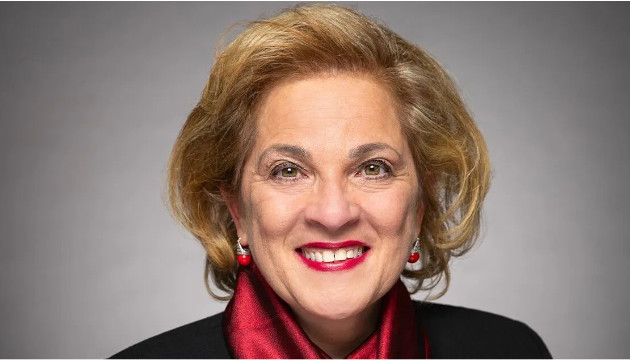
Canadian Filipino Net (CFNet) interviewed Marilyn Senador, a licensed immigration consultant with Senador Global Canada Immigration and a registered nurse, regarding the federal government’s reversal in policy.
CFNet: On the cuts to study permits and the pause on the child care and home support worker programs.
Marilyn Senador: For Filipinos who are already in Canada and who currently hold valid temporary status—such as a study permit, work permit, or visitor status—there is no immediate loss of status. If their permit is valid, they can remain legally in Canada until the permit expires. The real impact of these policy changes is not sudden removal, but uncertainty. Many people planned their lives around these programs because they were seen as clear bridges from temporary status to permanent residence. When those bridges are cut or paused, people are left unsure about their future.
These pathways are not the only ways for Filipinos to become permanent residents, but they have been among the most accessible and realistic. Other alternative pathways like the Express Entry or Provincial Nominee Programs require higher English or French scores, Canadian-recognized credentials, or employers willing to go through complex processes. For someone wanting to come to Canada now, my advice is to be very cautious and realistic. Immigration planning should never rely on a single program. People must ask themselves: If this pathway closes or is delayed, can I still remain in Canada legally? Having backup options is essential.
CFNet: On caregivers already in Canada looking for a pathway to permanent residency.
Marilyn Senador: Many caregivers in Canada currently hold employer-specific work permits or open work permits that were issued under special public policies. If the caregiver programs remain paused and no extensions or new pathways are introduced, individuals must take action which may include applying for another work permit through an employer and an LMIA (labour market impact assessment), changing their status to a visitor, or leaving Canada. If no action is taken, they risk becoming “out of status” when their permits expire, which can have serious consequences.
There are alternative pathways like provincial programs for healthcare and long-term care workers or employer-sponsored permits. However, these options are limited, competitive, and not available in every province. Not everyone will qualify, which is why many caregivers are understandably worried.
CFNet: On the possible effect of the policy reversal on Canada’s aging population.
Marilyn Senador: Canada’s population is getting older, and the need for caregivers and home support workers is increasing every year. Pausing these programs may help the government manage application backlogs in the short term, but it does not solve the long-term problem. In fact, it may increase pressure on hospitals, long-term care facilities, and families who are already struggling to find care. I do believe there will be pressure on the federal government to restart or redesign these programs, because the need for caregivers continues to be a reality.
CFNet: On the evolution of the caregiver program and the promise of landed status upon arrival.
Marilyn Senador: Over the years, the caregiver program has changed many times. Each new version is introduced with promises of fairness and stability, but uncertainty keeps returning. One major issue is that programs are often announced without enough resources to process applications quickly. Promising permanent residence on arrival is meaningful only if the system can handle the volume of applications.
A more sustainable solution would be fewer short-term “pilot” programs and more permanent, stable pathways written into law. These should have clear rules, fixed intake numbers, realistic processing timelines, and strong coordination with provinces and employers. Caregivers need predictability so they can plan their lives with confidence.
There is now less certainty than before for our kababayan caregivers. This does not mean caregivers will never receive permanent residence, but it does mean that relying only on pilot programs is risky. The safest approach is early planning, maintaining legal status at all times, and exploring multiple immigration options instead of waiting for one program to reopen.

About the Author
Rachel Ramos-Reid started writing for magazines and newspapers when she was still a junior at the University of the Philippines’ Communication degree program majoring in Journalism. She continued to write in a public relations/corporate communications capacity in various private and government offices until moving out of the country in 1997 to work as Programme Officer for the arts and culture branch of the Southeast Asian Ministers of Education Organization (SEAMEO-SPAFA) in Bangkok, Thailand. At the end of her term, Rachel found herself immigrating to Canada in the year 2000 and again searching for new beginnings.