September 16, 2026 — True love transcends race, but mixed unions can also come with challenges.
Cultural differences, traditional expectations, and contrary views about how to raise a family are some of issues that cause tension between partners.
Sincere dialogue is a way of overcoming these difficulties, which is something Vancouver-based filmmaker Joella Cabalu hopes couples do, and especially after watching her first feature documentary.
Titled First Comes Love: Nakabingwit, the rom-com style documentary is making its world premier at the 2026 Vancouver International Film Festival.
“It kind of uses the rom-com aesthetic in a documentary form to follow three Filipino women and their white romantic partners, and how they navigate conversations about race, class and privilege,” Cabalu explains in a VIFF promotional video clip.
Produced by the National Film Board of Canada, the 65-minute film also features a peek into Cabalu’s own love life with partner Luka.
In the NFB’s press kit for First Comes Love: Nakabingwit, Cabalu unpacks the Tagalog term “nakabingwit”, which literally means having caught a fish with a hook and line.
Colloquially, the Vancouver filmmaker explained, it means one caught a rich and white husband.
“When I talked to other Filipino Canadians, I discovered that this word carries both pride and shame. It’s a way to name this complex feeling. When I learned about the term nakabingwit, I felt like I finally had a name for what I had been feeling all those years after that fateful night when my friend told me I was ‘winning’ because I was dating a white guy!” Cabalu said.
As a filmmaker, Cabalu has an enduring fascination about themes of identity and inclusion.
Born in California to parents originally from the Philippines, Cabalu grew up in Brunei, and was six years old when the family came to settle in Canada.
Her 2016 mid-length documentary, It Runs in the Family, features her gay brother and artist Jay, and the film project saw the two siblings travelling to the old country to meet and talk with other queer Filipino relatives.
In the lead-up to the exhibition of It Runs in the Family, Cabalu spoke with Ricepaper Magazine, and she recalled often being asked where she came from.

“Being a woman of colour and having a diverse background has shaped how I understand the world to view me and simply saying ‘I’m Canadian’ doesn’t seem to satisfy that question. So I’ve become more interested in exploring questions of identity and belonging in my work because I believe many non-white Canadians and immigrants struggle with similar issues and they are often not heard,” Cabalu told the publication.
A Statistics Canada briefing paper titled Mixed Unions in Canada has noted the rising prevalence of interracial relationships.
Using data from its 2011 national household survey, the agency reported that while mixed unions account for a small proportion of all married and common-law couples, the numbers have gradually increased in recent decades as Canada's population has become more diverse.
Statistics Canada stated that data from the 2011 survey showed about 360,045 couples, or 4.6 percent of all married and common-law couples in Canada, were in mixed unions.
Of that number, the agency continued, 305,075, or 3.9 percent of all couples, were composed of one person who was a member of a visible minority and one who was not.
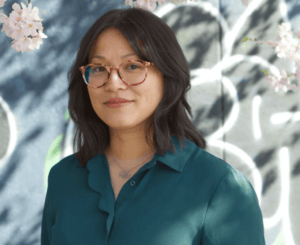 Joella Cabalu is a Vancouver-based filmmaker. Photo by Clare Yow on Cabalu’s website.
Meanwhile, 54,970 couples or 0.7 percent of all couples involved two persons from different visible minority groups.
The briefing paper went on to note that some visible minority groups have a greater tendency to be in mixed unions than others.
In 2011, Statistics Canada reported, people of Japanese heritage were by far the most likely to be in a conjugal relationship with a person from another group.
Specifically, of the 32,800 couples in which at least one person was Japanese, 78.7 percent involved a spouse or partner who was not Japanese.
Moreover, Latin Americans (48.2 percent) and Blacks (40.2 percent) were the second and third most likely visible minority groups to form mixed unions, according to Statistics Canada.
How about people of Filipino descent?
Filipinos came in fourth at 29.8 percent.
Arabs are fifth at 25.4 percent; Korean, 22.5 percent; Southeast Asian, 21.9 percent; West Asian, 19.5 percent; Chinese, 19.4 percent; and South Asian, 13 percent.
First Comes Love: Nakabingwit screens October 3 at 5:45 p.m. (SFU Woodwards, 149 West Hastings Street); October 7, 1:30 p.m. (International Village, 88 West Pender Street); and October 10, 3:45 p.m. (Alliance Francaise, 6161 Cambie Street).