June 1, 2026 – As Filipinos in Canada celebrate Filipino Heritage Month, Canadian Filipino.Net is proud to present its Outstanding Filipinos in Canada for 2026. Not only have these Filipinos succeeded in their respective fields of work but in the process of making a name for themselves, they have also have made a difference in Canada and made the world a better place for all.
These OFCs were successful not only in their roles in society, but more importantly, they have enhanced the lives of their fellow Filipinos in Canada and of Canadians in general and in so doing contributed to the multicultural nature of Canadian society and Canada’s prosperity at home and stature in the world.
This year’s OFC are: Borough mayor in Montreal Stephanie Valenzuela, Justice Edlyn Laurie, Justice Mylene de Guzman, Immigration lawyer Reis Pagtakhan, and PANCIT and Migrante BC co-founder Erie Maestro.
Borough Mayor Stephanie Valenzuela.
 Garnering over half of all votes cast in the November 2025 local elections in Montreal, Stephanie Valenzuela became the first Canadian Filipino borough mayor in Montreal. By receiving 16,452 out of over 32,000 ballots cast, she edged out incumbent Gracia Kasok Katahwa as borough mayor of Côte-des-Neiges-Notre-Dame-de-Grâce (CDN-NDG) by over 6,000 votes. Montreal has 19 boroughs which are made up of 58 electoral districts
Born and raised by Filipino immigrants in the Darlington district where CDN-NDG sits, Valenzuela was not only one of the youngest elected officials in Montreal when she won as councilor representing the Darlington district in 2021 at age 30 but also the first Canadian Filipino to earn a seat on the Montreal city council.
Now aged 34, Valenzuela went through the grueling campaign period pregnant with her first child. On her social media account, she admitted hesitating to jump into the borough’s mayoral race.
“Balancing the campaign with my pregnancy was something I really had to think through. But the support of Dean and the thought of my little girl gave me the courage to take on this challenge.”
Valenzuela promised to “help build a borough that gives (my daughter and her generation) and the ones that come after more than what we ever had growing up in Côte-des-Neiges.”
A graduate of McGill University with a degree in political science and international development, Valenzuela ran under the party Ensemble Montreal, led by Soraya Martinez-Ferrada who won as Montreal city mayor.
In an interview with The Condordian, Valenzuela acknowledged the complex issue of housing affordability. Citing the CDN-NDG borough, she said, “One of our biggest challenges for the next few years is how to avoid gentrifying those pockets of the borough…(that) they don’t become vacant buildings (with) big landlords (who) come in and start purchasing them to gentrify the area.” She is proposing regular inspections being done “to make sure that the landlord is compliant in fixing issues.”
In the same interview, Valenzuela stressed the importance of voting: “If you don’t vote, you’ve basically given your right to someone else to decide how your taxes will be spent, how your social programs will be handled, whether it’s at the provincial level for your healthcare, your education (or) at the municipal level for how your taxes are spent on
your basic services.” She continued, “So I just think that, in general, we have to educate people and sensitize people on what it means to actually vote and what it can translate to when you take the time to do it.”
Growing up in Montreal, Valenzuela learned the value of giving back to the community through her parents who themselves turned to the Filipino community in Montreal and volunteered to build a network.
The CDN-NDG borough is home to the largest Filipino community in Quebec with also the largest concentration of Filipino youth under the age of 24. According to the 2021 census, over 33,000 Filipinos live in the Montreal metropolitan area.
Justice Edlyn Laurie
 Justice Edlyn Laurie is the first Filipino Canadian appointed to the Supreme Court of BC.
Before her appointment to the Supreme Court onMay 24, 2024, Laurie was General Counsel at the Public Prosecution Service of Canada in Vancouver, practicing criminal and constitutional law. Laurie served on several committees within the Public Prosecution Service and was involved with the School for Prosecutors as a vice principal and faculty member. She also served as a council member for Health Quality B.C
Laurie was born to Chinese-Filipino parents in Manila, Philippines. She obtained a Bachelor ofArts degree in Political Science from the University of the Philippines in 1992. After working various jobs in Manila, she immigrated to Canada in 1999 to attend law school. In 2003, she obtained a Bachelor ofLaws degree from the University of British Columbia. She was admitted to the bar of British Columbia in 2004.
Laurie was a prosecutor with the Public Prosecution Service ofCanada (PPSC). The focus of her practice was criminal and constitutional law including the Canadian Charter of Rights and Freedoms. She has appeared in all levels of court in British Columbia and in the Supreme Court of Canada.
Her experience included conducting lengthy and complex trials including wiretap and criminal organization cases, conducting appeals, advising law enforcement agencies, obtaining wiretap authorizations as a designated Crown agent, and teaching. Laurie served on several committees within the PPSC including the National Litigation Committee, National Prosecution Policy Committee, and B.C. Appeals Committee. In addition, she was involved in the PPSC's annual School for Prosecutors as a vice-principal and faculty member.
She also served as council member with Health Quality B.C., an organization committed to improving health care quality in British Columbia. Justice Laurie lives in Vancouver with her husband and two stepdaughters.
Justice Mylene de Guzman
 Justice de Guzman was a family law lawyer, mediator, and arbitrator in New Westminster and the Fraser Valley BC for most of her career. She was on the roster of Access Pro Bono lawyers, was a member of Amici Curiae Friendship Society, was president of the New West Bar Association in 2022, and, before her appointment to the bench, was the first vice-president of the Canadian Bar Association (BC). De Guzman is the first Filipino Canadian to be appointed to the Provincial Court of BC.
Born in the Philippines, she immigrated to Ontario where she attended the University of Windsor and obtained her law degree in 1995. Articling at Greig, Skagen & Kennedy. she has worked as a family law lawyer in New Westminste and the Fraser Valley for most of her career. she obtained her accreditation as a family law mediator and arbitrator in 2015.
De Guzman was appointed a judge of the BC Provincial Court on March 3, 2025. She is the Court’s first judge born in the Philippines. In speaking about her appointment, Judge de Guzman commented, “My face on the Court represents British Columbia’s diversity, seen through my personal history and the choices I’ve made throughout my career. As a Filipino-Canadian, I am a living dichotomy of the marginalized and the privileged, of the simple and the complex, of the Land of the Morning and the True North, and it makes me feel lucky.”
She credits her parents as important role models who influenced her choices by the examples they set. Her parents enjoyed a comfortable life in the Philippines, but they left everything behind to start over in Canada when martial law was imposed in their homeland in 1972. Civil rights and the rule of law had suffered under government and military overreach. Instead of bringing up their two young children in those conditions, her parents chose to give them what Canada promised: free speech, educational opportunities, and the certainty of even-handed justice through courts free from political influence.
De Guzman attributes her respect for a free and democratic society to her parents’ choice.
As her mother joined her father in the workforce in Canada and worked overtime at two jobs, her parents demonstrated that women could do everything men did. They taught their children that when things were hard, you put your head down and tried harder. De Guzman learned other important lessons from her family.
“I was taught from an early age to lead a life of service, and that the best way to honour our parents’ gift is to contribute meaningfully to our community. We learned to be mindful of the chances given to us by the country that sheltered our family.”
Immigration lawyer Reis Pagtakhan
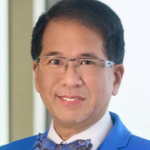 Canadian Filipino immigration lawyer Reis Pagtakhan received the Community Involvement Award from the Manitoba Bar Association (MBA) during its mid-winter conference on January 23. The award is one of eight recognition awards “honouring colleagues who demonstrate excellence and commitment to the law, the legal profession and the community at large.”
Pagtakhan has over 30 years of experience in corporate immigration law, assisting businesses and individuals on Canadian and US immigration matters and has been a partner at MLT Aikins LLP for 12 years. He specializes in securing temporary entry and permanent residency for foreign workers, executives and managers, and providing training to businesses and HR professionals on immigration law and processes and in creating systems that comply with federal and provincial immigration laws.
Some of Pagtakhan’s career highlights include obtaining work permits for professionals entering Canada pursuant to the former North American Free Trade Agreement (NAFTA), (now Canada-US-Mexico Agreement), the Canada-Chile Free Trade Agreement, the Canada-European Union Comprehensive Economic and Trade Agreement and the General Agreement on Trade and Services. He also provided work permit-related advice on work permits for technicians under the Canadian free trade agreements with Trans-Pacific Partnership countries.
As an MBA Community Involvement Award recipient, Pagtakhan joins other distinguished Canadians Ron Meyer (former Manitoba provincial judge and recipient of the 2002 Queen Elizabeth II’s Golden Jubilee Medal), Jeffrey Schnoor (ethics commissioner for the Manitoba Legislative Assembly), and Irene Hamilton (former Manitoba ombudsman and judicial advisory committee member).
Pagtakhan has been active in many Canadian Filipino groups such as the Philippine Canadian Centre of Manitoba and the Nayong Pilipino Folklorama. He currently chairs the Immigration Subcommittee of the Premier of Manitoba’s Business and Jobs Council, a position he has held since 2023. In 2024, he also served as chair of the council’s Immigration and Skills Alignment Subcommittee. Reis has presented position papers on immigration before the Minister of Citizenship and Immigration and co-authored the Manitoba Bar Association and CPHR Manitoba responses to federal government’s proposed immigration policy changes.
Pagtakhan is the eldest son of Dr. Rey Pagtakhan who is the first Canadian Filipino Member of Parliament and served as parliament secretary to former Prime Minister Jean Chretien.
Community Organizer Erie Maestro
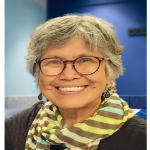 Maestro describes herself as “Nanay” to Inday Lara, and she is a community organizer, a retired librarian and archivist. Like her mother, Inday Lara is a trained librarian and archivist today.
Her parents come from Antique and Romblon Island. She has a BA from the University of the Philippines and master’s degrees in librarianship and in archival studies from Dalhousie University and the University of British Columbia. Erie and her then four-year-old daughter, Inday Lara, arrived in Halifax, Nova Scotia in 1991.In 2001, both moved to Vancouver, BC.
Maestro is a founding member of several grassroots organizations in Canada: Migrante BC, the grassroots organization for the protection and promotion of the rights and welfare of Filipino migrants and immigrants (2008), the Canada Philippines Solidarity for Human Rights(2007), the PANCIT Arts Collective (2012), the National Pilipino Canadian Cultural Centre (2019), and the Pinoy Elders Care and Support Society (2026). She is a member of the Malaya Movement in Canada, FILNET, and the UP Alumni Association of BC. She is also the People’s Warden of St. Mary the Virgin South Hill- Anglican Church in Vancouver.
When she retired before the COVID pandemic ended, she was the head of the Kensington Branch of the Vancouver Public Library. She started and created the first Filipino Children’s Programs in the library like the Pinoy Nanay Gansa (first Filipino Parent-Child Mother Goose program) and the VPL Children’s Virtual Storytime Kuwentuhang Pinoy.
Maestro is a member of the Canadian Ethnic Media Association and writes for the Philippine News and Times Today, Pinoyabrod.ca, the Philippine Reporter, and for the online Munting Nayon for many years.
She wrote her compelling story as an immigrant and single mother in a collection of contemporary women autobiographies, “And I will paint the sky: women speak the story of their lives” (2000), edited by Carole Trainer, and in the collection of “Aboriginal and Visible Minority Librarians: Oral Histories from Canada” (2011),edited by Deborah Lee and Mahalakshmi Kumaran.
She is especially proud of her work in the PANCIT (Philippine Artists Network for Community Integrative Transformation) arts collective. She learned her painting skills from art workshops led by Bert Monterona who As a PANCIT artist, she has exhibited in several group shows: Diversity, Diaspora, and Dialogue Art Exhibit (2012) and at the KAPWA Philippine Indigenous Arts Festival (2044), both at the UBC, the MigArtion Art Exhibition (2018) at the Roundhouse Community Arts and Recreation Centre in Vancouver, and the Healing Colours Art Exhibit at the Sunset Community Centre (2025).
In an exclusive with Canadian Filipino Net (CFNet), Maestro recounted the start of Migrante BC and PANCIT. . In 2012, I was among the students of Bert’s first arts workshops that included newcomers, mothers, organizers, youth and students, and caregivers.
The impact of the workshops on the participants, especially on the caregivers and their families, was felt by all -- the support, the listening, the closeness with one another, the understanding of the Pinoy forced migration, and the making and expression of art that helped the participants along. Bert described hisworkshops “art as therapy.”
“The art workshops were not just about skills-building like producing murals that we all worked on, but they were also sharing with others where we all came from,” recalled Maestro. “When we talked of our migration journey, it did not start with when we arrived in Canada, but where we came from, not just the Philippines but from countries like Saudi Arabia and Hong Kong. We all shared complex migration journeys,” Maestro explained.
Describing the evolution of the annual art workshops as organic, Maestro said that participants of the first workshop truly connected. “In fact, after the workshops, we did not want to go our separate ways. We asked ourselves can we organize ourselves and be together again doing art? And that is how the PANCIT Art Collective came to be. It was a natural growth of people coming together and not wanting to leave each other’s company.”
Fast forward to April 2025 – reeling from the Lapu-Lapu Festival tragedy, the PANCUT organizers came together and decided to slightly pivot the art workshops which were planned before the April 26 tragedy happened to the needs of the Filipino community in the face of trauma. “These art projects are usually done in the summer, but when the tragedy happened, it took on a different context, but it fell right into place.”
A series of weekend sessions started in May 2025 that culminated in an exhibit called Healing Colours Art Exhibit 2025 at the Sunset Community Centre that ran from October 24 to November 30.
Maestro acknowledges the limited pool of Filipino resources but believes that in the end, mental health professionals “need not speak our language.” But they have to be culturally competent and culturally sensitive to understand the uniqueness of the Filipino psyche.
Participants in the later workshops who witnessed the Lapulapu day carnage attested to how the sessions helped them. Maestro related, “In their own world, the sessions helped take their minds off the carnage that they saw, so that through that process, they gathered strength to focus on art and not the terrible images for maybe another set of hours, another set of days.”
“Art as therapy is such an abstract term that perhaps does not accurately picture what we do during those workshops,” said Maestro. “We tend to put our own Filipino ways of looking at things, finding humour sometimes in an almost macabre way and lending peer support counselling without even knowing that we are doing it.”
She adds that the helping each other (or therapy) is not co-terminus with the workshops nor the exhibit because participants do not lose their connection with each other. “Whatever support you get, there is a gift that keeps on giving.”