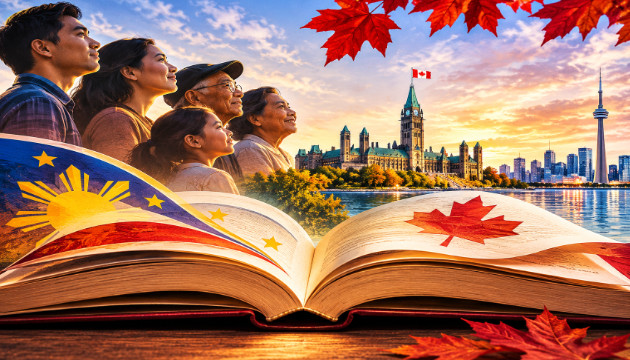
Each Canadian Filipino story is an essential chapter in Canada's ongoing nation-building.
November 16, 2026 — To mark the start of its second decade connecting with the Filipino community in Canada, Canadian Filipino Net (CFNet) introduced a new section, Filipino Canadian Voices, on Canada Day 2026, at first without a banner or full name. In this month’s edition, we reveal the section’s full identity, now with its banner and unique name: Tinig Pinoy, Canadian Soil (Filipino Canadian Voices / Your Story). We purposely emphasize “Your Story.” Our goal is not to gather a distant collection of articles, but to encourage first-person essays that serve as a living expression of active citizenship, community pride, and nation-building—stories that Filipino Canadians actively carry forward, not a passive keepsake put aside, as the term is often understood.
Memento, from Latin, means “Remember!” Tinig Pinoy, Canadian Soil (Filipino Canadian Voices / Your Story) acts as the living memento of the Filipino diaspora. This countrywide storytelling project shows that Filipino immigrants and their descendants are together writing Canada’s story as a nation that keeps growing, like a book still being written.
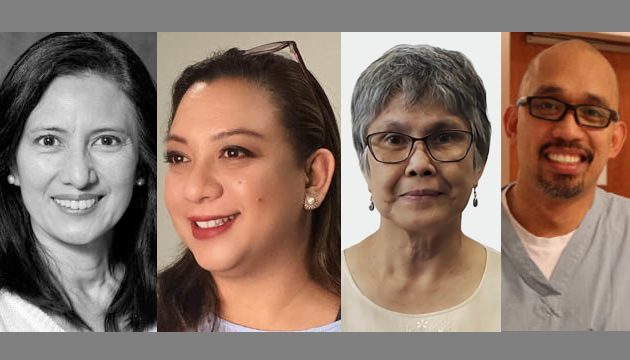
Our living memento has already begun to take shape. Prior to the official unveiling, we received three submissions. In her debut essay, Finding My Place on Parliament Hill, youth writer and second-generation Canadian Larissa Pagdato, an athletic therapist, reflects on her recent experience with the National Philippine Parliamentary Internship Program: “One of the greatest lessons I learned through NPPIP is that there is no singular, rigid path into public service. Every person brings a unique perspective, and those diverse perspectives make our institutions stronger. … When young Canadian Filipinos see themselves reflected in spaces like Parliament Hill, they begin to believe those spaces belong to them too.”
The second narrative, Canada: Where the Heart Regains Its Rhythm, is authored by first-generation elder Felipe Pascual, a practising lawyer and professor of law in the Philippines. He recounts a moving experience that illustrates the strengths of Canada’s immigration program: “When people ask…why we came to Canada, my answer is simple: we came for life itself…My beloved wife, Basilisa, was born with a congenital heart problem...We lived in constant worry (back home)…Here in Canada, my wife received the medical care she had been denied for so long…a cardiac pacemaker. For the first time in many years, she could live a normal life. She could walk without fear, sleep without struggle, and smile without pain. If Canada had given us nothing else, that alone would have been enough. That pacemaker did more than regulate her heartbeat—it gave us back our life together. …Canada gave my wife life.”
The third contributor, also a first-generation Canadian but from a younger generation, reflects on his personal progress, integrating music, education, and a sense of civic duty. His full story will appear in the next edition.
To appreciate the significance of individual narratives, consider how personal journeys contribute to nation-building. On a cold morning, January 6, 1968, nearly sixty years ago, the Canadian Filipino community had not yet developed into the multi-generational presence it is today. That day, my wife Gloria and I arrived at the Canadian border at Emerson, Manitoba, in our Chevy II Nova, carrying all our belongings as young professionals with specialized medical and dietetic training from St. Louis, Missouri. I intended to pursue further specialization in Winnipeg and save financially before eventually returning to our country of birth to practise as a chest specialist.
Just hours before we crossed the border, Stanford University Medical Center in California performed the first adult human heart transplant in the United States. As a young doctor aware of the flow of human life, I heard of that important medical event on the same day my Canadian journey started. This showed me a lasting lesson: big historic events and personal moves are deeply connected. Every person who crossed the border then, and every newcomer now, is an important heartbeat in Canada’s larger rhythm. Tinig Pinoy, Canadian Soil aims to ensure these Filipino Canadian heartbeats are recorded and preserved for future generations with equal historical importance.
My life in Canada — as a doctor, parliament member, and now a commentator on health and public matters — has focused on one goal: listening to and caring for people. By healing children, helping citizens, and joining public conversations, I learned that real care needs more than pills or policies alone. It means accepting that every voice deserves respect and careful attention.
For this reason, I am distinctly proud that Canadian Filipino Net launched our living memento initiative on July 1 and has now unveiled its distinctive banner and name in this edition. We are encouraged by the community’s response and trust you will help sustain this drive.
Consider the five key lessons that may be derived from our living memento (Tinig Pinoy, Canadian Soil) initiative:
- Showing how the quiet sacrifices of first-generation parents compound over decades into the civic, professional, and public-service achievements of their sons, daughters, and adult grandchildren;
- Demonstrating how our core Filipino values – bayanihan (communal solidarity), kapwa (shared identity), and pakikipagkapwa (shared humanity) – and steadfast work ethic are serving as practical models of value-laden leadership that guide how citizens serve in public office, healthcare, education, and workplaces;
- Getting useful ideas for good public policies with respect to recognizing foreign qualifications, reuniting families, settling in different regions, and fitting into workplaces;
- Bridging silent memory gaps between pioneering elders and Canadian-born generations by hearing the stories of caregivers, garment workers, nurses, tradespeople, entrepreneurs, and youth alongside historic trailblazers; and
- Encouraging cross-cultural solidarity across Canada through a searchable online archive and a bound print anthology placed in public libraries, schools, and university archives.
These outcomes will accentuate the sustained benefits of immigration, enrich the lives of all Canadians, and provide policymakers with a human-centred perspective to inform fairer immigration policies. By sharing our first-person narratives, we preserve our collective legacy and celebrate the Canadian citizenship that unites us.
Your story has a place in Tinig Pinoy, Canadian Soil and in our forthcoming anthology. We invite you to share your memories in print and help co-author Canada’s continuing story. [See Filipino Canadian Voices, for submission guidelines.]
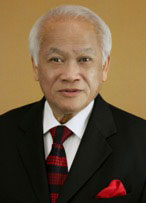
About the author: Dr. Pagtakhan is a retired University of Manitoba pediatric professor and lung specialist who has dedicated his life to medicine, community advocacy and public service. A landmark figure in Canadian governance, he served as a Member of Parliament for nearly 16 years (1988-2004), including Parliamentary Secretary to Prime Minister Jean Chrétien and Secretary of State for Science, Research and Development, Minister of Veterans Affairs, Minister of Western Economic Diversification, and Regional Minister for Manitoba. His unique community and professional experience as a clinical medical specialist-educator and a federal portfolio-political minister provides an unassailable foundation of perspective and expertise for evaluating public health architecture, federal infrastructure grants, and the strict due-diligence frameworks required to secure a multi-generational community capital project like the FCCC.